Articles by: admin

How to Diversify Ecological Science

Karina A. Sanchez, Amanda J. Bevan Zientek, and Emily A. Holt just released their study of college students’ awareness of institutional, structural, and cultural racism and sexism in the field of ecology. The team, all part of the University of Northern Colorado’s department of biological sciences when the study was conducted, first had students fill out a five-question survey on their own perceptions of racism and sexism in the ecological sciences. The students then collected and analyzed data to evaluate patterns in different publications and data, identifying those that might be problematic, and considered how racism/sexism affected the field. Following this intervention, the students were resurveyed.

All fields of science are now addressing legacies of injustice that can shape who participates in a given field, research projects, and policy outcomes, but many focus on research labs, or are top-down administrative changes. The authors identified college classrooms as centers of social change around the world. Starting there, they intend their work to help fill the research gap on how inequities are being addressed in colleges and universities.

The lack of diversity in ecological science has long been a matter of concern. Some years ago, npj Biodiversity, a journal within Science, posted an editorial identifying biodiversity research as a science of crisis. Over the millennia that crisis has been driven by unsustainable exploitation, and changes made to our landscapes, both directly and via human-assisted migration of nonnative species that may become invasive. The editors detailed how overemphasis on the temperate regions of the northern hemisphere and terrestrial ecosystems to the detriment of marine and freshwater ecosystems, drylands and other extreme habitats, all limit our understanding of interrelated forces, which in turn hampers our ability to improve outcomes. The editors also highlight the lasting impact of Darwin’s emphasis on competition among species. To them that has had a “tremendous, and to a considerable extent spurious,” effect on our understanding of evolutionary processes, perhaps especially our understanding of species co-exiting in diverse habitats. The “painfully consistent biases,” built into the ecological sciences also devalue the work of women, underrepresented minorities and indigenous peoples, as well as researchers from the Global South, all of whom have “unique knowledge” and views on how to proceed in our current crisis.

In their opening paragraphs, Sanchez, Bevan Zienek, and Holt note that efforts to reform medical sciences have intensified in part because social inequities in the field are so visible, and are now the focus extensive research. Ecological science has not had the benefits of this kind of intense scrutiny, and although the share of women has grown in higher education overall, in the ecological sciences, their focus here, there are persistent publication biases, as well as citation and funding imbalances, between men and women.

The authors note that “systems of oppression,” can affect study outcomes. For example, natural history museums tend to collect species with a slight overall bias to males among birds and mammals that can lead to significant disparities at the species level. In some cases just 27% of specimens are female, obviously a research issue. Further, habitats in underserved communities, as well as war-torn areas, are chronically under-sampled. The authors believe that systemic racism, gender bias, and colonialism have not only transformed ecosystems throughout the world, they continue to exacerbate unequal access to natural areas among marginalized communities.

We touch on much of this as reports come out. Two examples: biases toward the temperate north led to the short-sighted belief that only male birds sing, recently corrected by a team of female ornithologists who studied common ancestors of our migrating birds in Australasia where males and females were signing away.

A recent study by the venerable American Forests showed one can determine redlining practices used in the 1930s by forest canopies in our cities. The average canopy is 39%, running from 23% in formerly redlined communities, to 43% in primarily US-born white communities.

Sanchez and her team believe that although hiring of diversity officers and other administrative changes hold promise, they may get stuck in rhetoric with “minimal” long-term effects, and administrations are of course slow to change. Colleges have a long history of advancing civil rights, with women’s study programs advancing gender equality, and efforts to decolonize curricula and pedagogy picking up steam in the humanities and social sciences. But, again, science has lagged. The authors suggest that may be the fault of the narrative that tells us science is objective and value-neutral, and hence outside the realm of social justice.

The study included thirty-eight upper division undergraduates, primarily white, 68%, and female, 79%, with 16% Latino, 8% Asian, 5% multiracial, and 3% African-American participants. About 60% were continuing generation students, meaning at least one parent attended college. In the twelfth week of the sixteen-week semester, the students filled out a five-question open response survey, anonymously and without pay: who does ecology, are they aware of one prominent ecologist to whom they can personally relate, is the field racist, is it sexist, did European colonialism affect the field, and does it still? Two weeks later, the team introduced their intervention, designed to outline social justice issues in ecology, and identify demographic representation of field ecologists. Students worked in groups to identify under-representation and inequality in ecological data, including the nationalities of “parachute” scientists, those who drop into a developing country and complete data collection and analysis with no input from local scientists or the community. For example, in Indonesia forty percent of published studies of coral reefs included no local scientists.

Students were given plenty of time to research their topics, to discuss them fully, and to look for patterns, and decide if the patterns they discovered represented problems. When the intervention was completed, students were resurveyed using the same five questions.

And the responses had indeed changed. The share who believed anyone with interest could participate in the field dropped by 16%, and shares agreeing that ecology was influenced by sexist or racist rose. In this day and age we need to point out that the idea was not to force beliefs on the students, but to discover how exposure to different data changed their thinking. In fact, the authors were unsure if some students had wondered about racism and sexism in ecology, but didn’t feel safe sharing those feelings until the study project was complete. They also stressed that some students expressed an interest in promoting diversity in their own careers after the intervention, and explored possible routes in study groups. And to us their statements included greater nuance in the second survey.

Fun fact: For generations, Draw-a-Scientist studies produced a stereotypical white man in a lab coat from K-12 students, despite ongoing changes in science. Other interventions cited in Sanchez, Bevan Zientek, and Holt’s study helped students move beyond this stereotype. Instead of scientists being defined as “people who do experiments,” descriptions focused instead on traits like curiosity and specific interests. Sanchez et al. suggest this may help potential ecologists both relate to scientists and to see themselves as scientists. And incorporating topics like discrimination and oppression helps “disrupt the façade of neutrality in science,” helping students understand that ecology is “imbedded in humanism with all its biases.”

And, as you might guess, the authors sign off with an acknowledgement that this is one step, which they classify as a transformational approach, and many more are needed to build curricula focused on solutions, and to increase opportunities that will support a diverse scientific community.

The New York Botanical Garden has long included diverse scientists in their programming, including indigenous scientists who are guiding restoration efforts with their own practices.

If of interest, you can watch some webinars here.

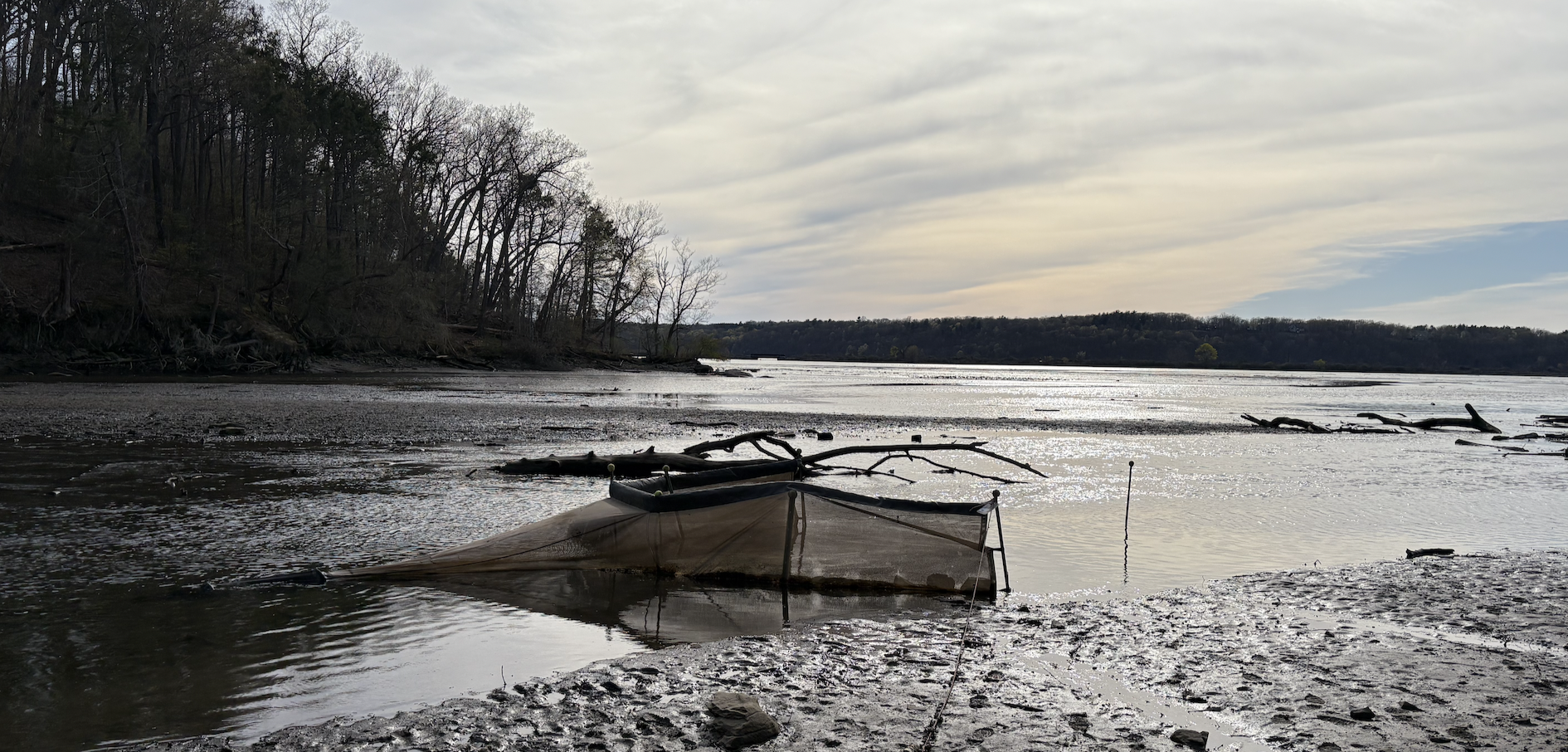
Photographs: Field science projects are a great way to involved diverse students. Eel populations are in severe decline, and Bard College students, along students from the region, help catch, count and release the glass eels caught in the fyke net to monitor their levels. The glass eels you see in the second photograph just spent the last year drifting up on the currents from the Sargasso Sea.
Credit: Philippa Dunne

by admin· · 0 comments · Comments & Context

Lost Pages: Eroding our confidence in public data

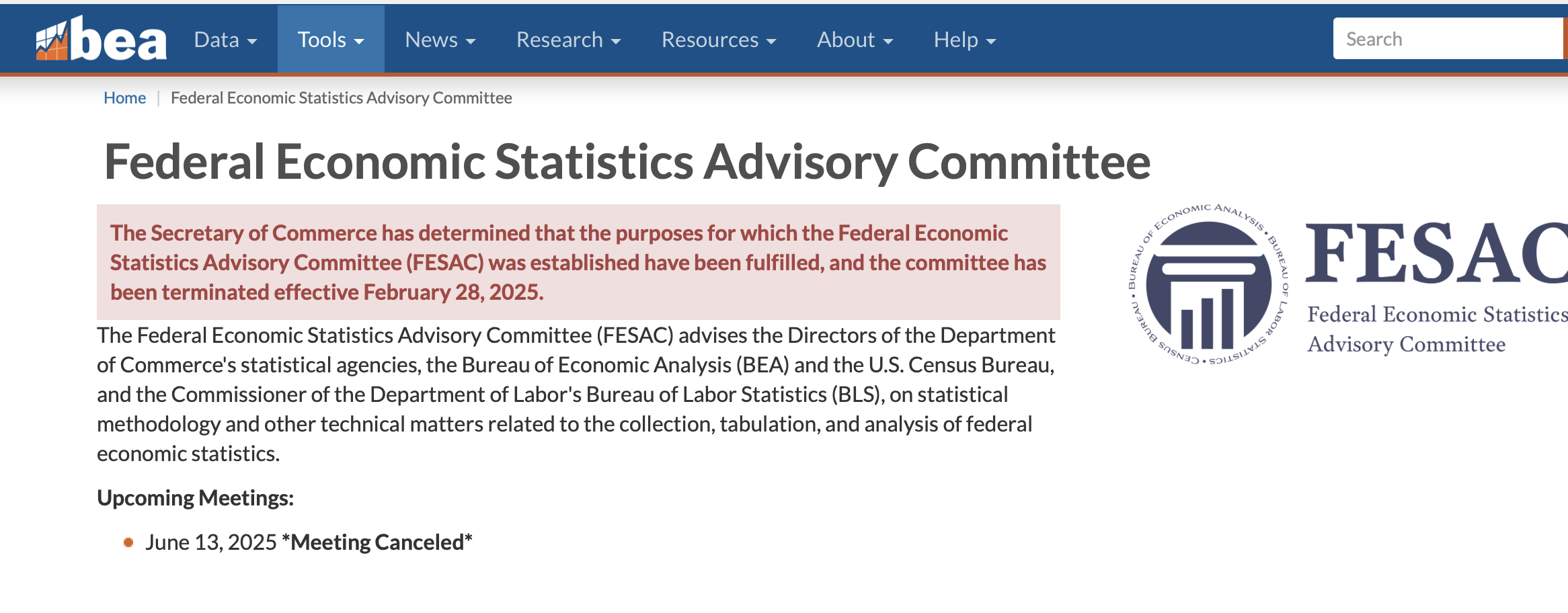
The effects of a recent executive order purging advisory boards working with federal agencies include dismantling the Bureau of Labor Statistics’ Technical Advisory Council, and Data Users Advisory Committee. Boards advising Census and the Bureau of Economic Analysis were also dismissed.

These advisors are experts in their fields, with broad understanding of the BLS’s different series, and their strengths and idiosyncrasies. They have significant experience in sample design, modeling, analysis and interpretation of large structured and unstructured data sets, formulating survey questions, and accessibility. In addition, they advise on technicalities, and on changes in what data users need, and on new series that would be more relevant in our changing economy, and less relevant series that could be trimmed, especially important as the BLS is chronically underfunded. The TAC specifically excludes anyone subject to federal registration requirements covering lobbyists. Terms generally last two years, and board members provide their expertise and guidance for free.

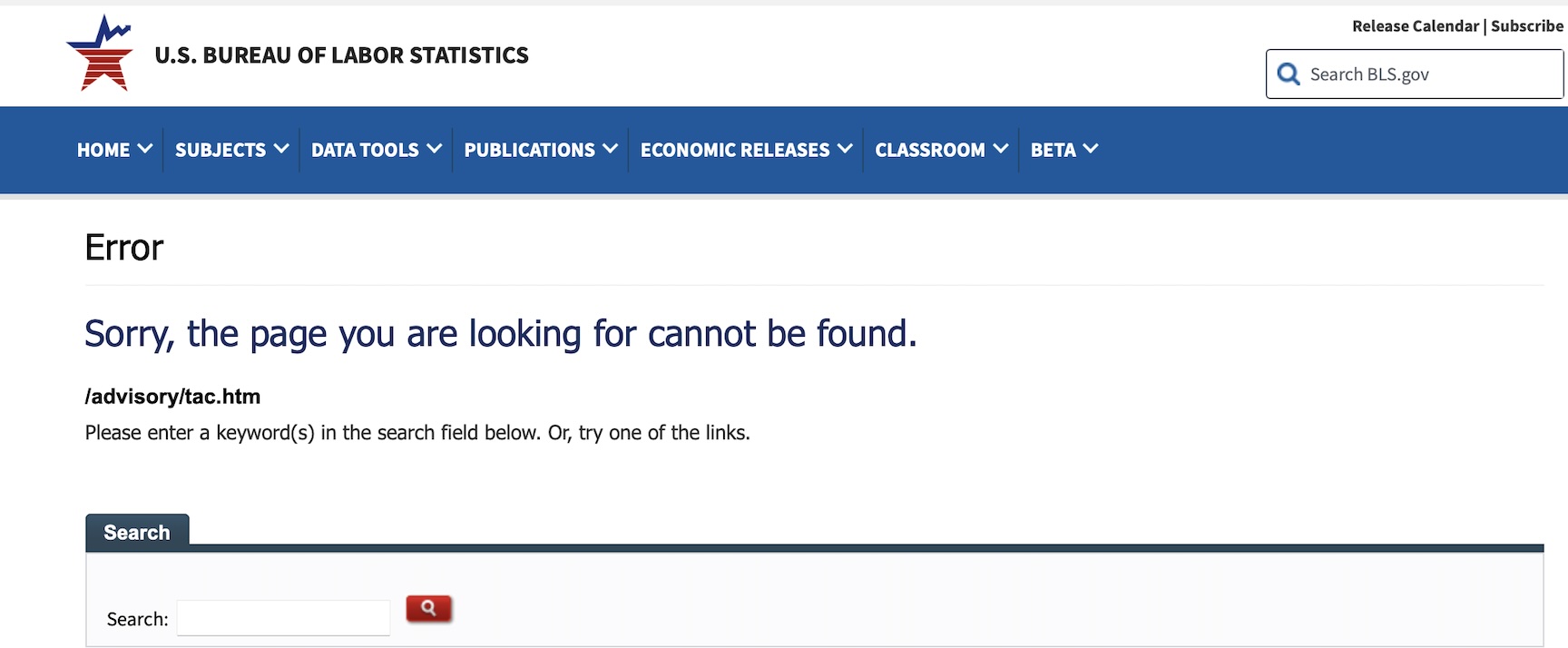
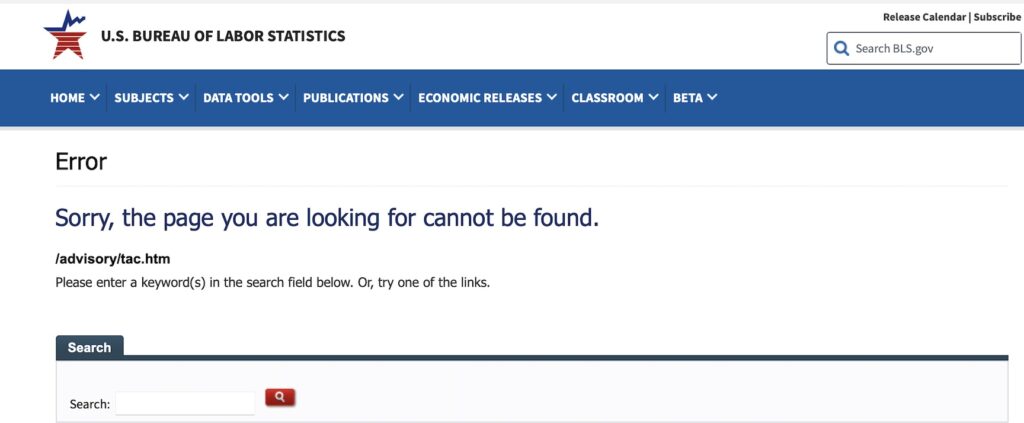
We cribbed some of that text from the BLS’s page on the committees yesterday. Today that page is gone.

Of course, accurate data is critical both to policy makers striving for rational outcomes in our disjointed economy, and to investors. Neil Dutta recently highlighted the importance of our federal data, calling it the gold standard, and wondering what a glitch in one of our major economic reports would do to global markets. He’s far from the first analyst to do so.

In an interview with Politico’s Weekly Shift, former BLS commissioner Erica Groshen points out that if senior BLS leadership were to be suddenly serving at the “pleasure of the president,” that might make BLS statisticians afraid to point out data points they consider statistically unsound. And we’ll add that if it became known that the BLS had been politicized, that itself might rattle confidence, built as it is on a fragile structure.

There are always complaints, especially when the actual release throws egg on your forecast’s face. (Don’t tell anyone, but we’ll admit to guiltily checking the birth/death model on such mornings.) In the last decades the tenor of those complaints has become increasingly alarming, including accusations of outright fraud. When asked if the public would have a way of knowing if there were erroneous data, Dr. Groshen, with her usual candor, responded that in addition to ensuring that “every tax dollar is well spent,” by advising on most appropriate technologies, and allowing data users themselves to have a voice, the advisory boards provide transparency. “…if there were attempts to manipulate BLS in some way that was unprecedented, illegal [or] something inappropriate, it would be more obvious in the context of the give and take of an advisory committee than in many other ways.”

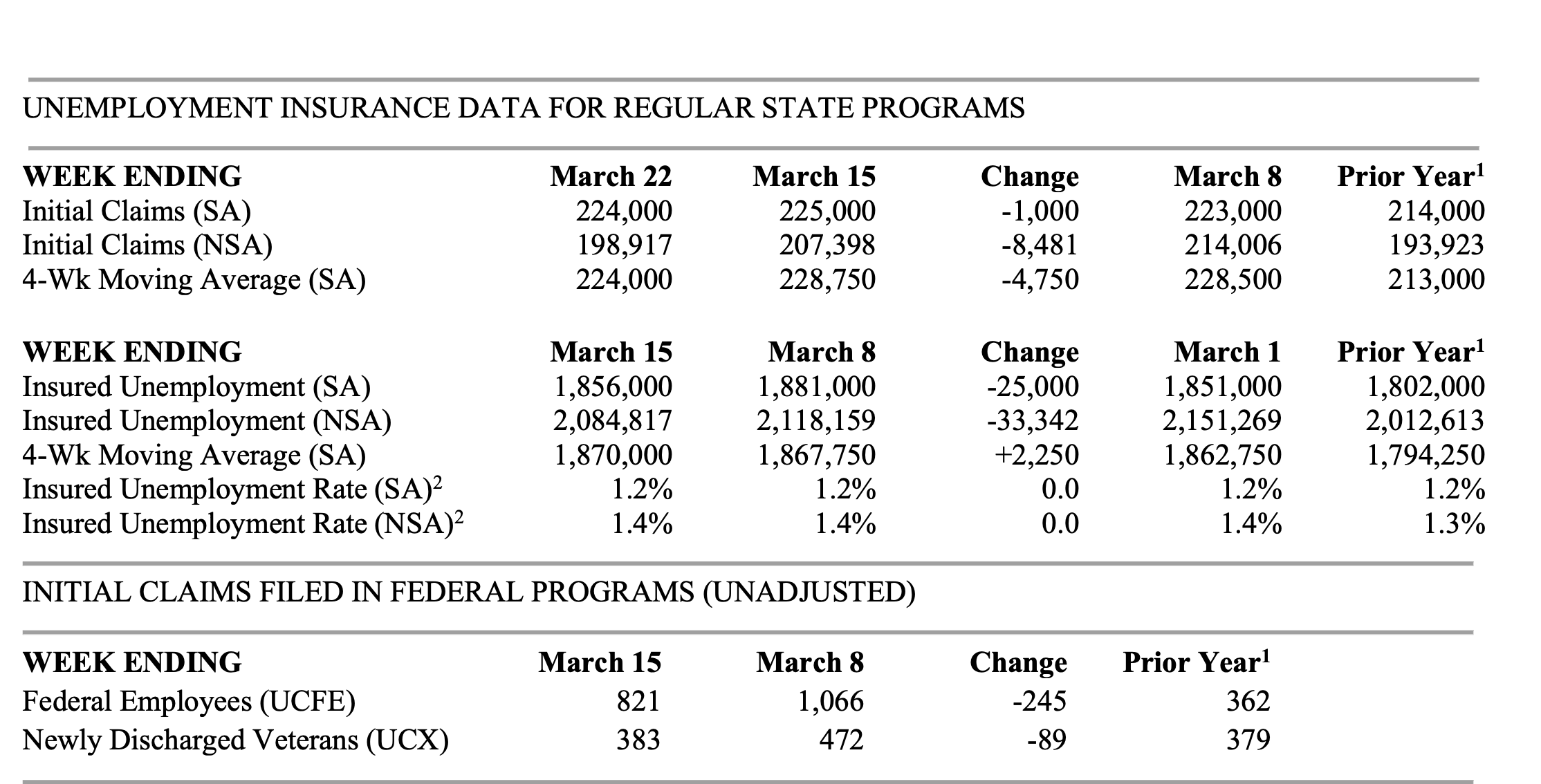
Over the years, to address legitimate complaints, say about lagged data, Dr. Groshen has promoted ways to restructure our statistical sources to provide more timely and granular data. Her widely supported suggestions include funding the Department of Labor to reframe the weekly UI claims reports to function as an economic indicator instead of the administrative record those reports were built to be, and to publish the full data set based on UI data, the Quarterly Census of Employment and Wages, with a shorter lag. Despite the complaints, apparently there’s no money for that.

According to Dr. Groshen, in disbanding the TAC, we “lose one more means to counteract baseless accusations…one more means to communicate exactly what you did and why,” and to clarify questions. “I would say that if an administration wanted to try to manipulate data, then they would not want to have these advisory committees around.”

Business owners in the Capitol region are hiring uprooted federal workers, and offering perks, like free yoga classes, discounted degree programs, and medical care for their pets, acknowledging that the “federal workforce is a wildly important part of our economy.”

There will be no free yoga classes or any other form of enlightened self-interest that will offset the damage caused by the degradation of our public data sources. Come to think of it, on the first Friday of the month, instead of fielding calls from clients who suspect the employment report has been manipulated, we may all be wondering about that ourselves.
by admin· · 0 comments · Red Flags

Bedlam hits the states

Federal agencies are required by federal statute to provide 60-day notice of workforce reductions to offset potential strains on state systems and mitigate harms to workers in affected regions. The agencies also reveal to state boards if terminations were performance based or part of a workforce reduction.

As we all know, the new administration has fired workers in the hundreds and thousands without following procedures, perhaps most importantly without notifying the states involved. Apparently, some agencies are citing restructuring, others performance issues, as the reason for terminations, and state agencies have to look carefully at each claim, a process likely to become overwhelming time consuming as purges continue. Until verifications are completed, employees cannot be “released,” meaning that in addition to having no job, they have no benefits. (Lawsuit here.)

It will be a long time before we know the details but, for example, MSN reports that in March 2024, 189 federal workers applied for UI in Maryland. So far this month, offices are receiving 30 to 60 filings a day, which would ratchet up to a 630 to 1,260 total by the end of the month. In the highly unlikely event the current rate remains steady, that is.

federal workers by state

“Economic pain is contagious,” said Michele Evermore, senior fellow at the National Academy of Social Insurance, in a recent interview, so let’s take a look at state concentrations.

Nationally, federal workers make up under 2% of total nonfarm employment, about the same as “insurance carriers and related activities.” A fifth work in DC and environs, constituting 5.8% of total nonfarm employment there. Many states are working to bring federal workers into their own offices, yet some states may not be able to accommodate willfully terminated employees in either private or public sectors. States with largest shares of federal workers, over 2.5%, include Alaska, Hawaii, and New Mexico. In Oklahoma, Wyoming, and West Virginia shares run from 2.0% to 2.5%, followed by 1.5–2.0% in Alabama, Georgia, Mississippi, Maine, Montana, Puerto Rico, and Washington. In the rest of the country, the rates are lower than the national average, with South Dakota’s <0.5% the smallest share. To us, that’s a worrisome mix.

by admin· · 0 comments · Red Flags

Tariffs over time—in words and pictures

As we were wrapping up this issue, the president-elect announced the creation of an “External Revenue Service” (ERS). It will, as he put it, demonstrating his idiosyncratic understanding of trade, “collect our Tariffs, Duties, and all Revenue that come from Foreign sources. We will begin charging those that make money off of us with Trade….” Almost no one aside from him and his circle of advisers thinks that foreigners, rather than US consumers, pay tariffs, but let’s set that aside for now.

Instead, let’s look at tariffs over the long sweep of history. According to a useful factsheet from the Congressional Research Service, tariffs were an easy way to collect revenues in the early history of the country, which didn’t have a developed administrative structure. There were only so many ships sailing to unload goods in so many harbors, so taxing those goods was not much of a technical challenge. The government was small and didn’t need that much revenue anyway.

The tariff and revenue histories are illustrated in a quartet of graphs below. From 1792 to 1930, federal revenue averaged less than 3% of GDP. (Obviously those old GDP figures are guesses, but let’s take them as a decent approximation of reality.) From 1792 to the eve of the Civil War, 1860, tariffs provided an average of 86% of total federal revenue. (There were some bumps before the Civil War, notably the War of 1812, which juiced expenditures and savaged imports.) Besides borrowing heavily, the federal government increased excise taxes, reducing dependence on tariffs and leaving them accounting for just over half of federal revenues in the last third of the 19th century. With the introduction of the personal income tax (PIT) in 1913, tariffs receded in importance; since 1945, the PIT has accounted for 45% of federal revenues.

(Speaking of federal revenues, the popular notion that taxation has been growing like Topsy can’t survive fact-checking. As the graph shows, federal revenue as a share of GDP has been nearly flat for the last seven decades; in fact, the 2024 share, 17.1%, is below the 1951 share, 18.4%.)

With the growth of the PIT, and federal revenues generally, tariffs (or customs duties, to use the technical term) have largely disappeared as source of federal revenue. (In the graph on the lower left, you can see a spike around 1930, the time of the infamous Smoot-Hawley Tariff, which many, though not all, economists believe contributed to the Great Depression.) Customs receipts barely cracked 1% of total revenue in the 1990s and 2000s. With the tariffs imposed during the first Trump administration, and preserved by Biden, that share doubled to 2% in 2019–2022, but they’ve eased back to 1.6% in 2024. That looks poised to change

Since Trump has floated the idea of replacing the PIT with tariffs—switching from “taxing our Great People using the Internal Revenue Service,” as he said in the Truth Social announcement of the ERS—it’s interesting to experiment with how large those tariffs would have to be to plug the revenue gap. In the first three quarters of 2024, goods imports were $3.3 trillion at an annual rate, and the PIT brought in $2.5 trillion. Matching that would require a tariff rate of 70%. The effective tariff rate last year—revenues divided by the value of goods imports—was under 3%. Obviously a 70% tariff would decimate imports, but we’re not even considering that.

It all seems like a stretch.

by admin· · 0 comments · Comments & Context

A Truly “Who Knew?” Survey

Montana grizzly bears forage in the dusk

We came across a survey covering public support for the Endangered Species Act, including among different demographics, over roughly the last twenty years.

Jeremy Bruskotter and Ramiro Berardo, who teach at Ohio State, and John Bruskotter, at University of Michigan, compiled polls taken over the last twenty years and found support of the Act to be remarkably stable.

As background, visible declines in game species and those taken for millinery use, like the Carolina parakeet whose flocks once darkened the skies, led John Lacey, a Republican representative from Iowa, to introduce the Lacey Act of 1900, the first legislation regulating commercial animal markets. Later came the Migratory Bird Treaty of 1929, between the US and Canada, and others leading up to the broader Endangered Species Act of 1973.

Some animals protected by these acts have recovered, like our iconic bald eagle, bison, manatee and grizzly bear, while others, like the whooping crane, remain endangered with slowly recovering populations. That’s not so shocking: science-based conservation science is often effective and takes time.

What is shocking: the broader Endangered Species Act of 1973, written at Richard Nixon’s request, passed with a 355-4 vote. And the public likes it.

The authors compared  results of the base survey conducted in 1996, and those conducted in 2011, 2014 and 2015 and found them “statistically indistinguishable.” Overall, four in five American support the Act, and one in ten oppose it, while some don’t know what they think. And, while gun control and climate change have become increasingly polarized, the majority of self-identified liberals, 90%, moderates, 77%, and conservatives, 74% support the Act. No surprise that 92% of environmentalists support the Act, as do 73% of hunters, who often partner with ecological conservation groups, but it is stunning that 71% of farmers and ranchers support protecting vulnerable species, as do 69% of property rights advocates, who have been among the most verbal opponents.

Another surprise: Some supporters of the Act have expressed concern that protecting “controversial” animals, like gray wolves, may turn people in wolf territory against the Act, but both trust in the Fish & Wildlife Service, which administers the Act, and opinions about wolves within and without wolf territory are equivalent.

If this all seems odd given the unflagging pressure in Congress to weaken the Act, other research, specifically this study of wolf reintroduction in Scotland, shows that leaders of special interest groups often hold more extreme views than their members.

by admin· · 0 comments · Comments & Context